未果/MIKA
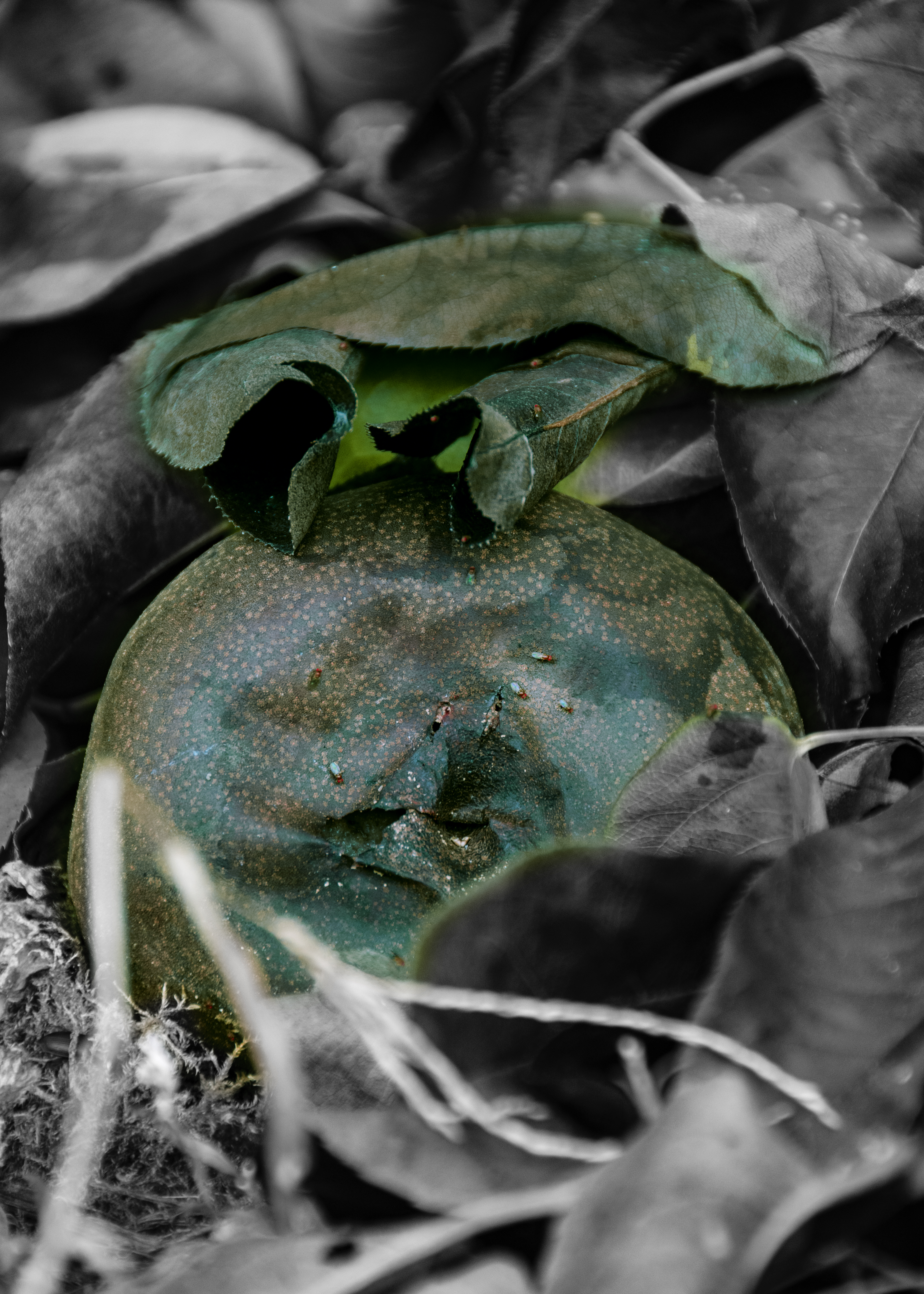
材料:玻璃,废弃玻璃,掉落的梨,酒精,蜡烛,影像
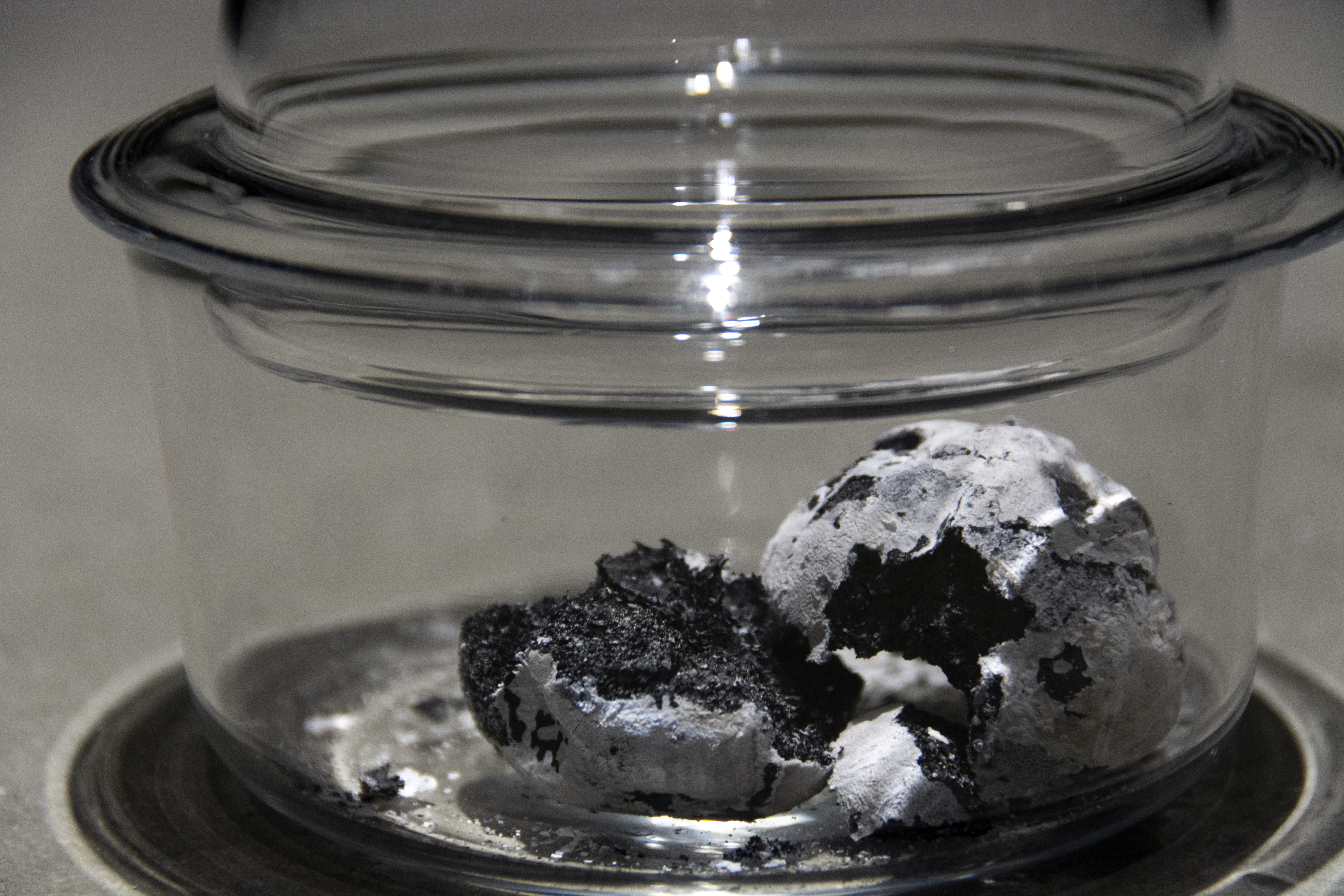
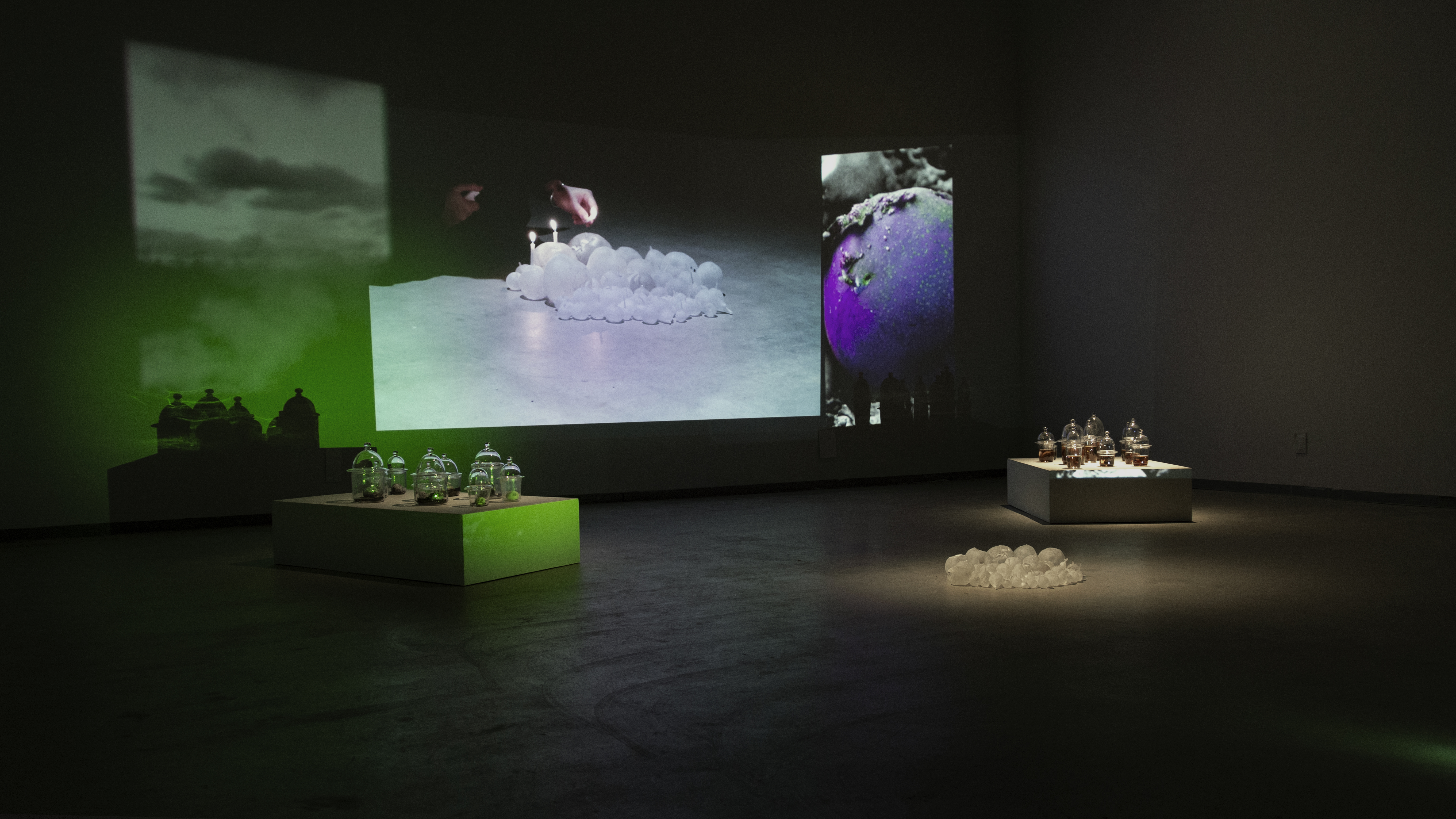
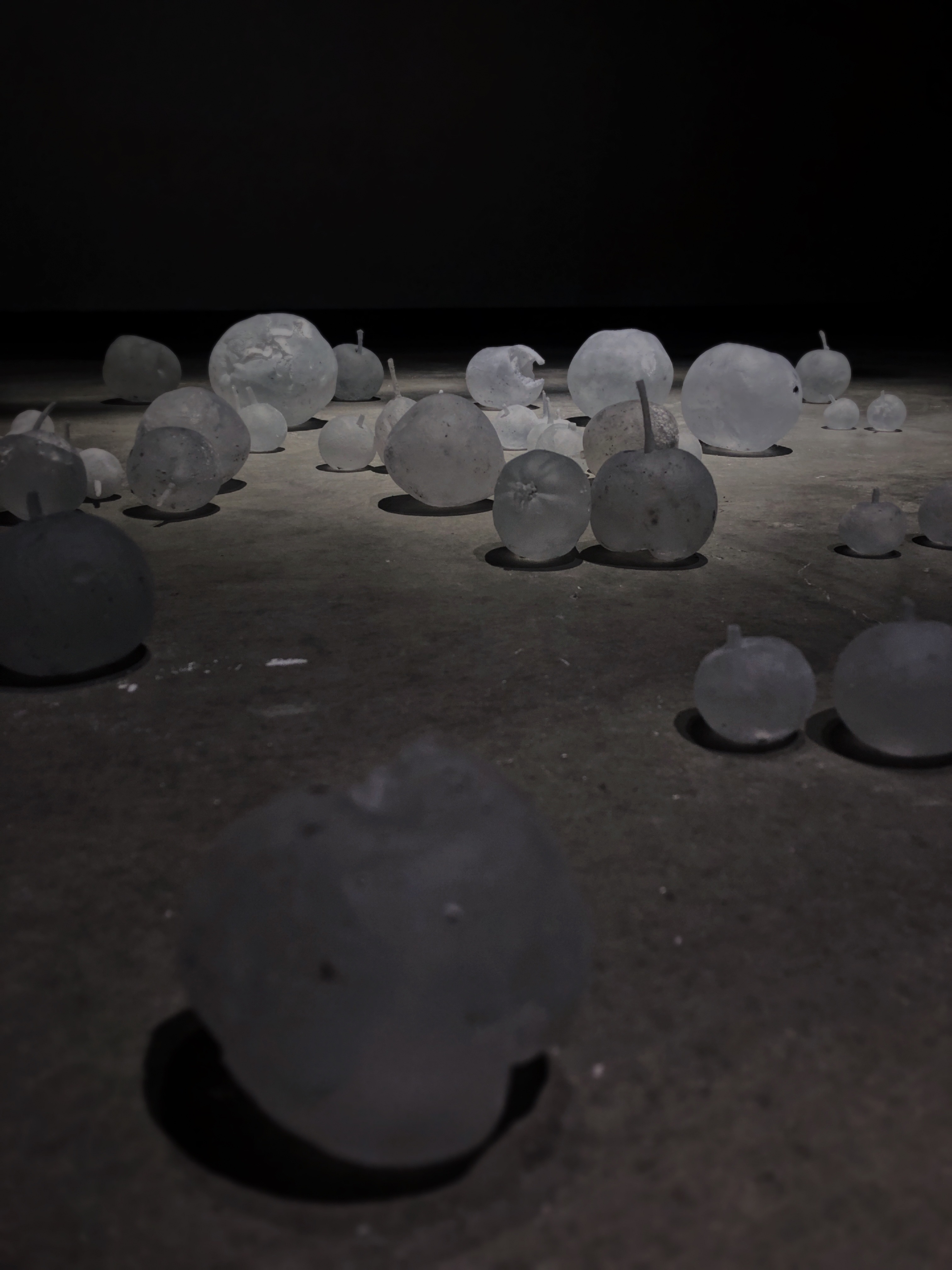
在富山玻璃研究所期间,我以当地盛产的吴羽梨和玻璃为素材创作了这件作品。
当时正值疫情,学校以网课为主,我常骑单车穿梭于学生公寓附近的梨田间,一望无际的梨树,因为整齐划一的高度和间距,树不成林,只能看做是田地.
梨作为农作物被大量培育,产果为目的导致畸形的形态远超梨树自身的承受力,必须以水泥柱和金属网作为支撑。
除此之外还散落着巨型铁皮垃圾桶,尤其学校工房附近的垃圾桶里扔满了废弃的玻璃。征得同意后,我开始收集掉落的梨与碎玻璃。
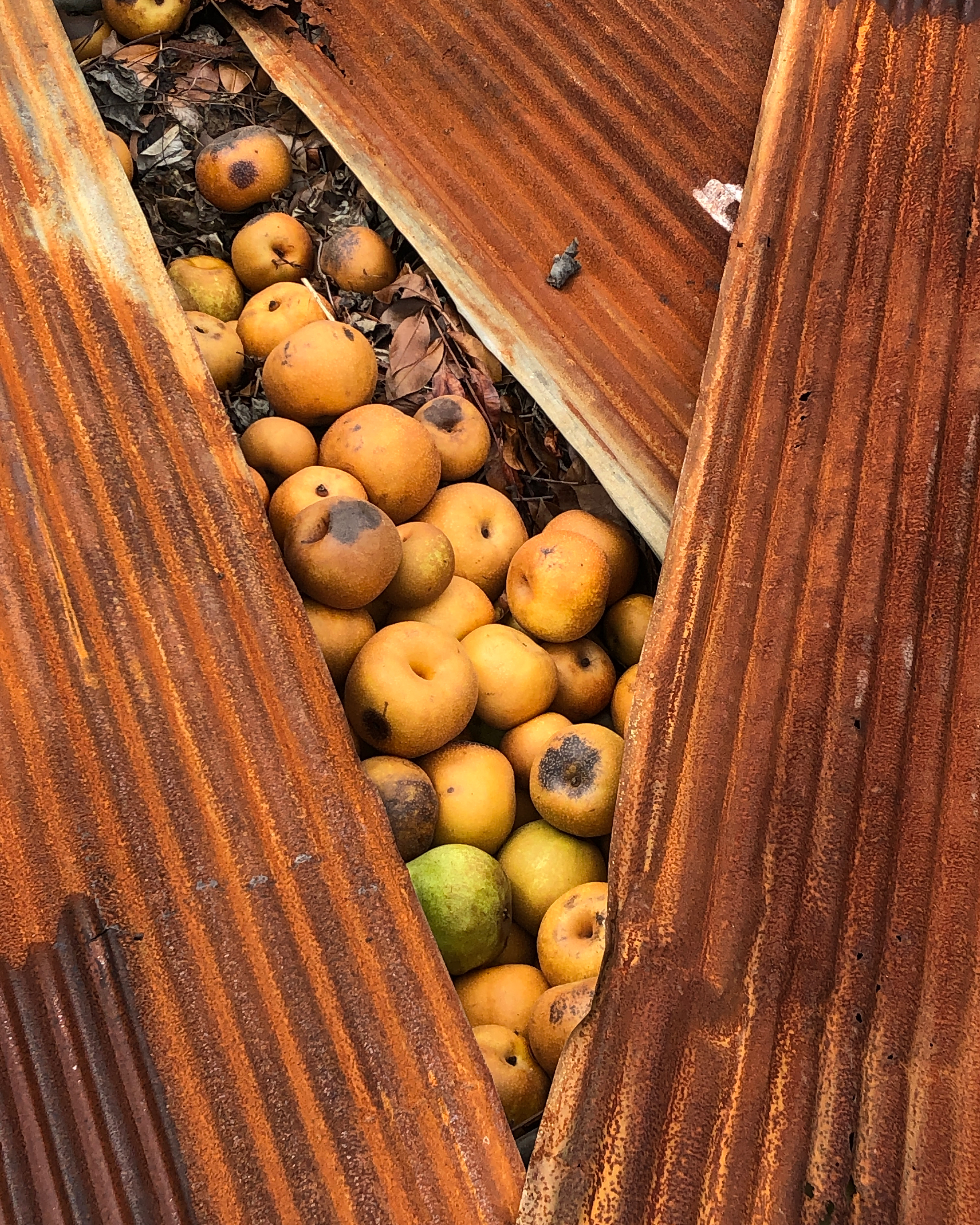
四季更替,我见证了梨树的生长、结果、凋落,并在夏季进入梨园打工。梨农告诉我,这些梨树由果苗直接培育,果实难以自然繁殖。收成后,梨子按形状、色泽、大小分级,而生长过程中因梨树自身为了营养集中或外力影响(天气、虫鸟)大量落果。收成季时,超市里摆上了新上市的吴羽梨,上千日元一小袋;另一边田间,大量被淘汰的梨则填埋于深坑。
我尝试想象梨的“生存目标”——基因延续的本能被人为筛选中断,恰如人类自身的命运:从生命初始的竞争,到为部分利益牺牲多数,甚至死亡亦非终点。最终,我选择以人类的丧葬礼仪为梨举行一场葬礼,喻示这种系统性循环的暴力与荒诞。

December 2020




Unfulfilled( Mika ) 2020
Materials: Glass, Discarded Glass, Fallen Pears, Alcohol, Candles, Video
During my time at the Toyama Institute of Glass Art, I created this work using locally abundant Kureha pears and glass
as materials. It was during the pandemic, when classes were mostly held online. I often rode my bicycle through the
pear fields near the student dormitories—endless rows of pear trees that, due to their uniform height and spacing,
appeared less as a forest and more as a cultivated field. Pears, grown as an agricultural crop, are produced on a massive scale. The demand for fruit has led to shapes so distorted they exceed the tree’s natural capacity to support
them, requiring concrete posts and metal nets for reinforcement.
Scattered throughout the area were also large metal dumpsters, especially near the school’s studios, filled with
discarded glass. With permission, I began collecting fallen pears and broken glass.
Over the changing seasons, I witnessed the pear trees grow, bear fruit, and shed. In the summer, I took on work inside
the pear orchards. The farmers told me these trees are cultivated directly from seedlings, making natural reproduction
nearly impossible for the fruit. After harvest, the pears are sorted by shape, color, and size. During growth, many fruits
fall—either because the tree naturally sheds them to concentrate nutrients, or due to external forces like weather,
insects, or birds. During harvest season, newly picked Kureha pears appeared in supermarkets, sold in small bags for
thousands of yen, while in the fields, large quantities of rejected pears were buried in deep pits.
I began to imagine the pear’s “purpose for existence”—its instinct to continue its genes artificially interrupted by
human selection, much like human fate itself: from competing for life from the very beginning, to sacrificing the many
for the benefit of a few, where even death is not an end. In the end, I chose to hold a funeral for the pears following
human burial rites, as a metaphor for the violence and absurdity of this systemic



未果は私が富山ガラス研究所で在学中に完成した作品です。私の知る限り、富山で最も有名なものは二つあり、それは呉羽梨とガラスです。
当時、私が住んでいたアパートの近くには果てしなく広がる梨畑がありました。梨は農作物として大量に栽培され、果実を収穫するために、異形の形状が梨の木自身の耐久力を超え、水泥柱や金属ネットで支えられています。結果として、市場に出荷される梨よりも淘汰される梨の方が遥かに多いのです。成長過程で、栄養を集中させるために落ちた小さな梨、天候や虫、カラスによって破壊された梨、形が不揃いな梨、色が均一でない梨、そして合格ラインに達した梨は再び品質によってランク付けされます。まるで人間そのものです。受精卵になる前から競争が始まり、死んでも競争は終わらないのです。彼/彼女はもっと美しい、彼/彼女はもっと才能がある、彼/彼女はもっと成功している。ある人々の利益のために他の人々の利益が犠牲にされ、全ての人を保全することは不可能です。もし人類ではなく他の種族だったとしても、同じことが起きるかどうかは予見できません。私は判断することができず、批判する意図もありませんが、果てしなく続く梨畑を通り過ぎるとき、地面に転がる梨と鼻に入ってくる甘く腐敗した香りは、現実の悲哀を感じさせました。